
An event agenda tells guests what will happen, when and where, from the moment doors open to the final thank-you. Whether you’re planning a product launch, a fundraising gala, a networking evening or an awards night, a clear agenda helps guests enjoy the event and helps your team keep it on time. Behind the scenes, most organizers also use a more detailed timeline called a run of show.
On this page you’ll find free event agenda and schedule templates in Microsoft Word, a sample evening event agenda, a matching run-of-show example, agendas for galas, networking events, award ceremonies and more, a planning timeline, and tips for keeping events on schedule.
Free event agenda templates
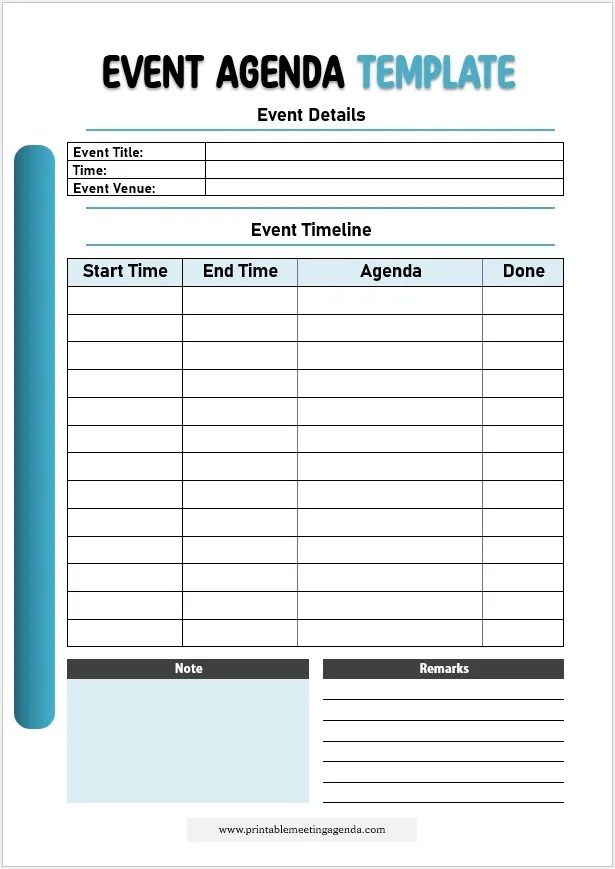
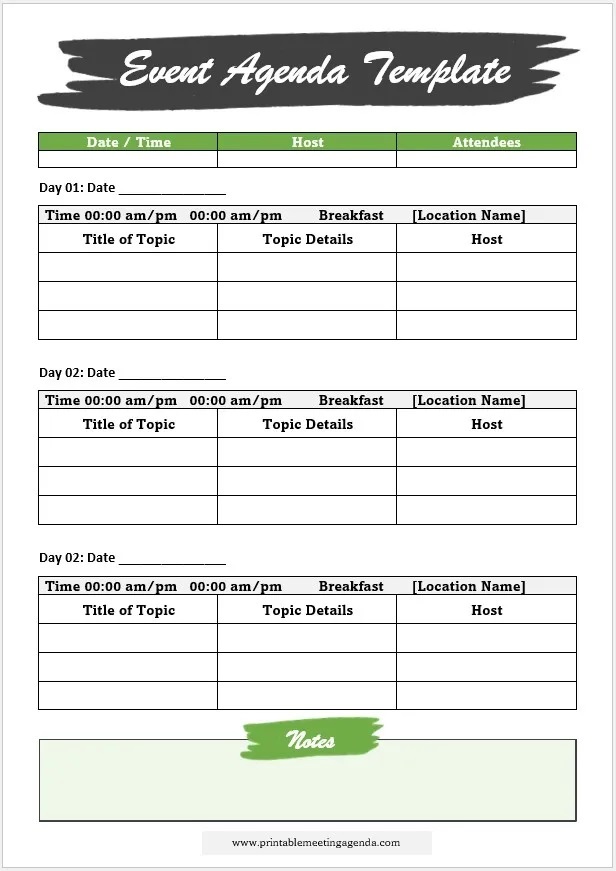
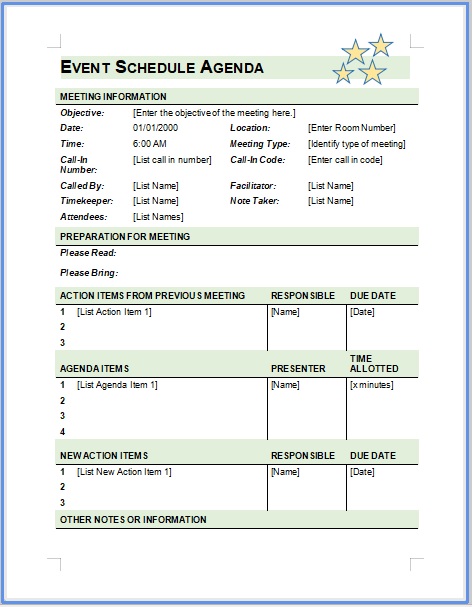
Professional, printable and schedule-style event agenda templates, including a retreat event agenda. Download them free and edit in Word or Google Docs.

Event agenda example
Here is the guest-facing agenda for a three-hour product launch evening. It shows only what guests need to know: timings, what’s happening and who is speaking.
Lumen Home
Spring Collection Launch Evening
Tonight: Be the first to see the spring collection
| Time | What’s happening | With |
|---|---|---|
| 6:00 | Doors open, welcome drinks and canapés | — |
| 6:45 | Welcome from our host | Ella Martins |
| 7:00 | The spring collection: reveal and demo | James Lee, CEO |
| 7:25 | In conversation: designing for small spaces | Guest designer |
| 7:45 | Explore the product stations and networking | Our team |
| 8:45 | Thank you and prize draw | Ella Martins |
| 9:00 | Close | — |
Printed agenda cards at the entrance · Hashtag on every table
Only about 45 minutes of the three hours is stage time. The rest is for guests to mingle, try products and talk to the team, which is usually why they came.
Event agenda vs. run of show
An event agenda is for guests: a short, clear schedule of what happens and when. A run of show is for the organizing team: a minute-by-minute timeline of every cue, who is responsible, and the technical details. Here is part of the run of show for the launch evening above:
| Time | Cue | Owner | Notes |
|---|---|---|---|
| 5:30 PM | Final walk-through; staff briefing | Event manager | Check stations, signage and guest list |
| 6:00 PM | Doors open; background music on | Front of house | Check-in at entrance, coats to cloakroom |
| 6:40 PM | Five-minute warning to guests | Host | Lower music, dim house lights |
| 6:45 PM | Host on stage | AV technician | Handheld mic 1, walk-on music |
| 7:00 PM | CEO on stage; product reveal | AV technician | Reveal video on screen, lapel mic 2 |
| 7:25 PM | Fireside chat | Stage manager | Two chairs and water set during applause |
| 7:45 PM | Stations open | Product team | Music up, house lights up |
| 8:45 PM | Prize draw | Host | Draw box from registration desk |
| 9:00 PM | Close; guests depart | Front of house | Gift bags at exit |
Share the run of show with every staff member, supplier and speaker, and keep the guest agenda simple.
What to include in an event agenda
- Event name, date, time and venue. With the full address and any parking or transport details.
- A short welcome or theme. One line on what the event is about.
- Timed schedule. Arrival, each program item, breaks, meals and the finish time.
- Speakers and performers. Names and a short description of each.
- Locations within the venue. If different parts of the event happen in different rooms.
- Sponsor recognition. Where appropriate.
- Practical information. Wi-Fi, dress code, accessibility, social media hashtag and contact details.
Agendas for different events
Fundraising gala
- Arrival, drinks reception and silent auction opens
- Guests seated; welcome from the chair
- Dinner service
- Impact story or video about the cause
- Live auction or appeal
- Silent auction closes; entertainment
- Thanks, fundraising total and close
Networking event
- Registration and name badges
- Welcome and a quick introduction activity
- Short talk or panel (20 to 30 minutes)
- Structured networking, such as table rotations
- Open networking with refreshments
- Thank you and next event date
Awards ceremony
- Arrival and reception
- Welcome from the host
- Dinner or first course
- Award presentations, grouped by category
- Keynote or special recognition award
- Closing remarks and photographs
- Celebration and entertainment
Company celebration or anniversary
- Welcome drinks
- Remarks from leadership
- Look back: milestones, video or photo display
- Staff recognition and long-service awards
- Food and entertainment
- Toast and close
Open house
- Doors open and self-guided tour
- Scheduled guided tours or demonstrations
- Short welcome talk
- Q&A with staff
- Refreshments and informal conversation
For other kinds of events, see our dedicated agendas for conferences, seminars, retreats and team days, and community event planning meetings.
Event planning timeline
| When | What to do |
|---|---|
| 3–6 months before | Set goals, budget and date; book the venue; draft the agenda |
| 2–3 months before | Book speakers, entertainment and suppliers; send invitations |
| 1 month before | Finalize the agenda and run of show; confirm catering, AV and staffing |
| 1 week before | Send the agenda and practical details to guests; brief speakers and staff |
| On the day | Walk through the venue, brief the team and follow the run of show |
| After the event | Thank guests, speakers and sponsors; send a survey; review what worked |
Tips for keeping events on schedule
- Keep stage time short. Guests remember the conversations more than the speeches.
- Give every speaker a strict time. And a visible countdown or signal when time is nearly up.
- Build in buffer time. Add five to ten minutes between major items for changeovers and late starts.
- Hold a rehearsal. Walk speakers and the AV team through every cue.
- Appoint one person to run the timeline. A stage or event manager should have authority to move things along.
- Have a plan B. Know what to cut if the event runs late, and what to do if a speaker doesn’t arrive.
Frequently asked questions
What is an event agenda?
An event agenda is a schedule that tells guests what will happen during an event, when each part starts, where it takes place and who is involved.
What is the difference between an event agenda and a run of show?
An event agenda is a simple schedule for guests. A run of show is a detailed, minute-by-minute plan for the organizing team, listing every cue, owner and technical detail.
What is an event program?
An event program is a printed or digital booklet given to guests. It includes the agenda, and often speaker bios, sponsor recognition and background information about the event.
When should I share the event agenda with guests?
Share a basic outline with the invitation, then send the full agenda about a week before the event. Have printed or digital copies available on the day.
How detailed should an event agenda be?
Keep the guest agenda simple: key times, main items and speakers. Put detailed timings, cues and responsibilities in the run of show.
What should I do if an event runs late?
Decide in advance which items can be shortened or cut. Keep the main moments, such as the key speech or award, and trim networking time or secondary items instead.
Related agenda templates
You may also need a conference agenda, retreat agenda, marketing meeting agenda, banquet and events meeting agenda or invitation letter templates. Or browse all meeting agenda templates.