
An informal meeting is a relaxed, flexible conversation between colleagues, classmates or group members: a coffee catch-up, a quick brainstorm, a lunch meeting or a check-in at someone’s desk. There’s no chair, no motions and no official minutes. But even casual meetings go better with a light agenda, a few topics written down so the conversation stays useful and everyone knows what happens next.
On this page you’ll find free informal and casual meeting agenda templates in Microsoft Word, a sample informal meeting agenda, common types of informal meetings, a simple five-part format, and guidance on informal meetings with employees about performance or conduct.
Free informal meeting agenda templates
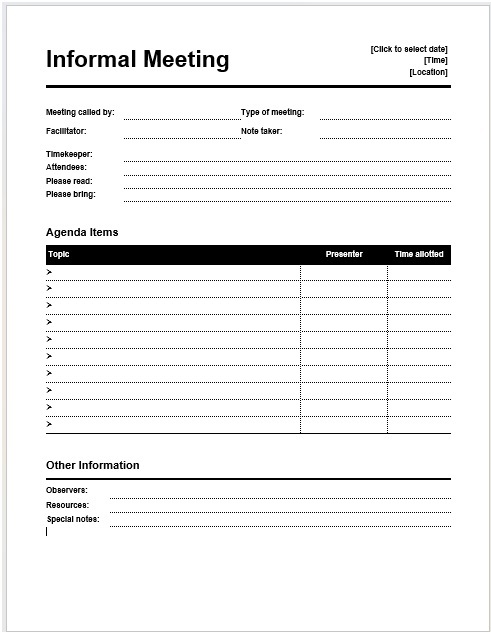
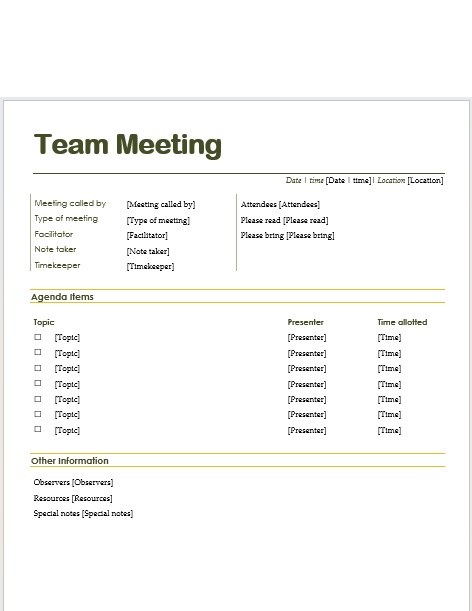
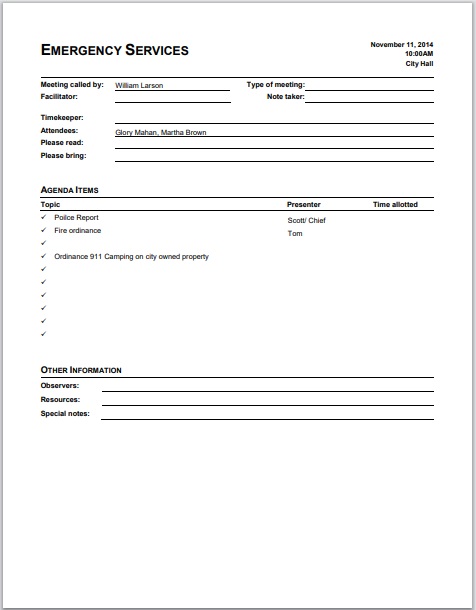
Templates for informal and casual meetings, informal staff meetings, student groups, school teams and quick emergency meetings, plus an informal meeting notes template. Download them free and edit in Word or Google Docs.
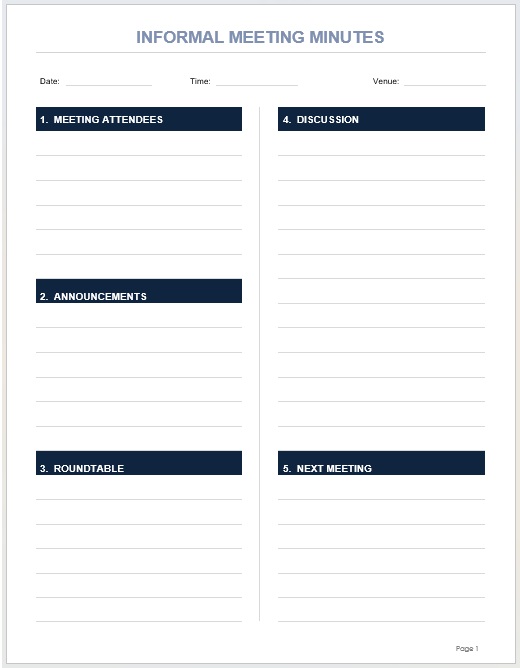
Editable Informal Meeting Minutes Template
File Type: MS Word {Zip File}
File Size: 19 KB
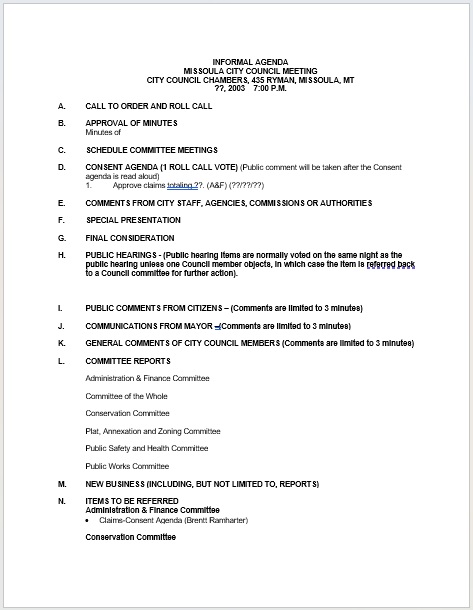
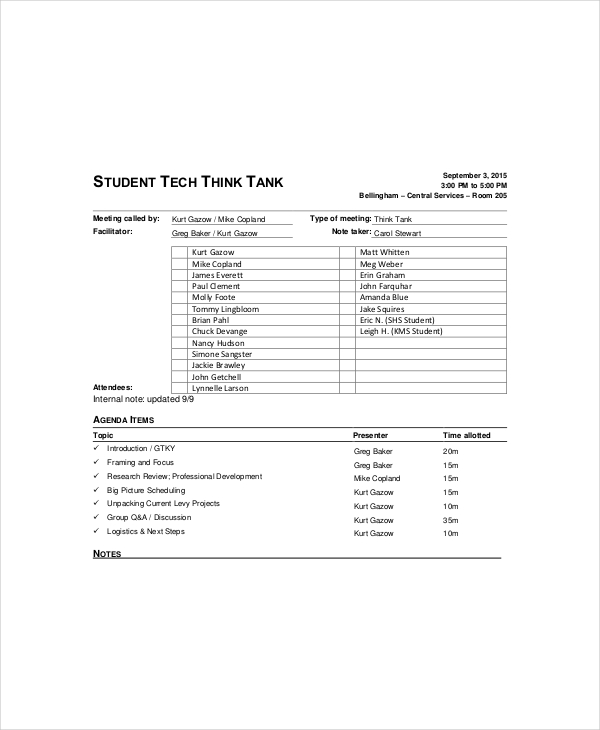
School Improvement Informal Team Meeting Agenda
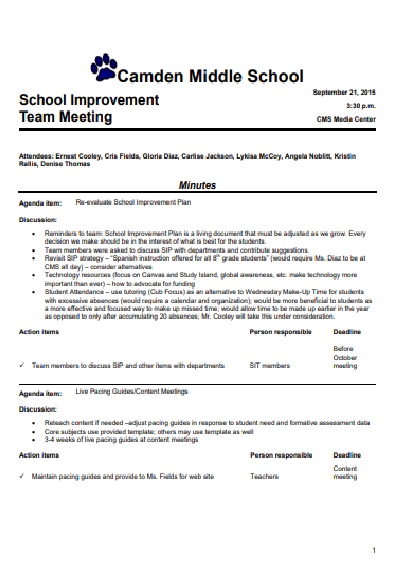
File Type: MS Word {Zip File}
File Size: 149KB
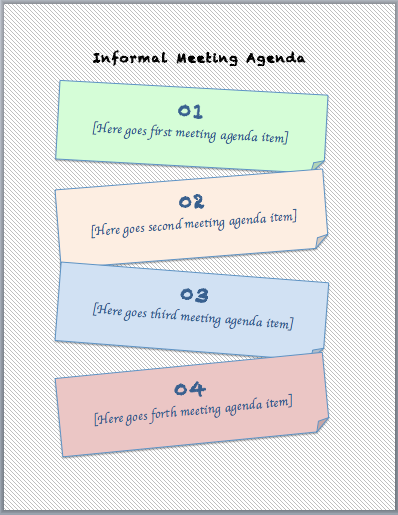
Informal meeting agenda example
Here is the kind of agenda that works for an informal meeting: a short list of topics, rough times, and one clear outcome. It could be written in a calendar invite or a chat message in under a minute.
Coffee catch-up
Planning the Launch Email
Goal: Agree on next steps for the launch email
| Time | Topic | Who |
|---|---|---|
| 2:00 | Quick catch-up | All |
| 2:05 | How’s launch prep going? | Jess |
| 2:15 | Ideas for the launch email | All |
| 2:25 | Who does what next | Sam |
Notes and next steps shared in the team chat afterwards
That’s all an informal agenda needs: a goal, a few topics and a moment at the end to agree on who does what.
What is an informal meeting?
An informal meeting is a meeting held without formal procedures. It usually has these features:
- A small group, often two to six people
- A relaxed setting, such as a café, someone’s desk, a break room or a short video call
- Little advance notice, sometimes arranged the same day
- A short, flexible agenda, or just a list of topics
- Open, conversational discussion rather than a chair and motions
- Notes or a follow-up message instead of official minutes
Informal meetings are good for sharing ideas early, solving small problems quickly, building relationships and talking openly. Decisions that affect a whole organization, or that must be recorded officially, usually belong in a formal meeting. Our formal meeting page includes a side-by-side comparison of formal and informal meetings.
Examples of informal meetings
| Meeting | Typical length | Good for |
|---|---|---|
| Coffee catch-up | 15–30 minutes | Building relationships, sharing ideas, quick questions |
| Brainstorm | 30–60 minutes | Generating ideas before anything is decided |
| Lunch meeting | 45–60 minutes | Getting to know a colleague, client or partner |
| Quick huddle or stand-up | 10–15 minutes | Daily priorities and blockers |
| Desk-side check-in | 5–15 minutes | Answering a question or unblocking a task |
| Informal staff get-together | 30–45 minutes | Team news, recognition and open conversation |
| Student or study group | 30–60 minutes | Planning group projects and dividing work |
| Quick emergency meeting | 10–20 minutes | Responding fast to an urgent problem |
A simple informal meeting agenda format
Most informal meetings need just five parts:
- Goal. One line on what you want to leave with.
- Quick catch-up. A few minutes to settle in.
- Two or three topics. Written as questions, such as “How should we split the project?”
- Next steps. Who will do what, and by when.
- Follow-up. A short message afterwards with the key points.
For more everyday formats, including copy-and-paste agendas for 15, 30 and 60-minute meetings, see our basic meeting agenda templates.
Informal meetings about performance or conduct
In the workplace, “informal meeting” also often means an early, private conversation between a manager and an employee about a performance or conduct concern, before any formal process begins. Many organizations use these meetings to resolve issues quickly and supportively.
A typical agenda for this kind of meeting is:
- Explain the purpose of the meeting and that it is informal
- Describe the concern with specific, factual examples
- Listen to the employee’s view and any circumstances affecting them
- Discuss what support, training or changes could help
- Agree on clear expectations and a timeframe for improvement
- Agree on a date to review progress
Hold the meeting in private, keep a brief written note of what was agreed, and follow your organization’s policies. If the issue is serious, or doesn’t improve, your organization’s formal procedures may apply, so check with HR before and after the meeting. This is general information, not legal or HR advice. For regular supportive conversations, see our one-on-one meeting agenda.
Tips for productive informal meetings
- Still share a goal. One line in the invite helps people come prepared.
- Keep it small. Invite only the people who need to be there.
- Keep it short. Most informal meetings need 15 to 30 minutes.
- Pick the right place. Choose somewhere quiet enough to talk, especially for sensitive topics.
- Don’t skip next steps. Relaxed doesn’t mean nothing happens afterwards.
- Follow up in writing. A quick message avoids “I thought you were doing that.”
- Know when to go formal. Move major decisions, disputes and anything needing an official record to a formal meeting.
Frequently asked questions
What is an informal meeting?
An informal meeting is a relaxed meeting without formal procedures, such as a coffee catch-up, brainstorm or quick check-in. It usually has a small group, a flexible agenda and no official minutes.
Do informal meetings need an agenda?
They don’t need a formal agenda, but a short list of topics and a clear goal makes them much more productive. It can be as simple as three bullet points in a calendar invite.
Are minutes taken at informal meetings?
Official minutes usually aren’t needed. A short follow-up message or notes with decisions and next steps is enough. Our informal meeting notes template can help.
What is the difference between a casual and an informal meeting?
They mean almost the same thing. Both are relaxed meetings without formal rules. “Casual” is often used for very light, social catch-ups, while “informal” can also describe early workplace conversations, such as an informal meeting with an employee.
Can decisions be made at an informal meeting?
Everyday team decisions often are. But decisions that need a vote, a quorum or an official record, such as those of a board or committee, should be made at a formal meeting.
What is an informal meeting with an employee?
It is an early, private conversation between a manager and an employee about a performance or conduct concern, aimed at resolving the issue before any formal process. Follow your organization’s policies and keep a brief note of what was agreed.
Related meeting agenda templates
You may also need a formal meeting agenda, basic meeting agenda, team meeting agenda or one-on-one meeting agenda. Or browse all meeting agenda templates.
Pingback: Formal Meeting Agenda Template: Format, Example & Order (Free)