
A staff meeting brings together everyone in a department, office or organization to share news, explain changes, recognize good work and answer questions. Because it takes time from so many people at once, a staff meeting needs a clear agenda more than almost any other meeting.
On this page you’ll find free staff meeting agenda templates in Microsoft Word, a sample monthly staff meeting agenda, 40 staff meeting topic ideas, and agenda outlines for offices, schools, healthcare teams and restaurants.
Free staff meeting agenda templates
Choose from simple outlines, structured agendas with time slots, and formats with space to record action items. All templates are free to download and edit in Word or Google Docs.
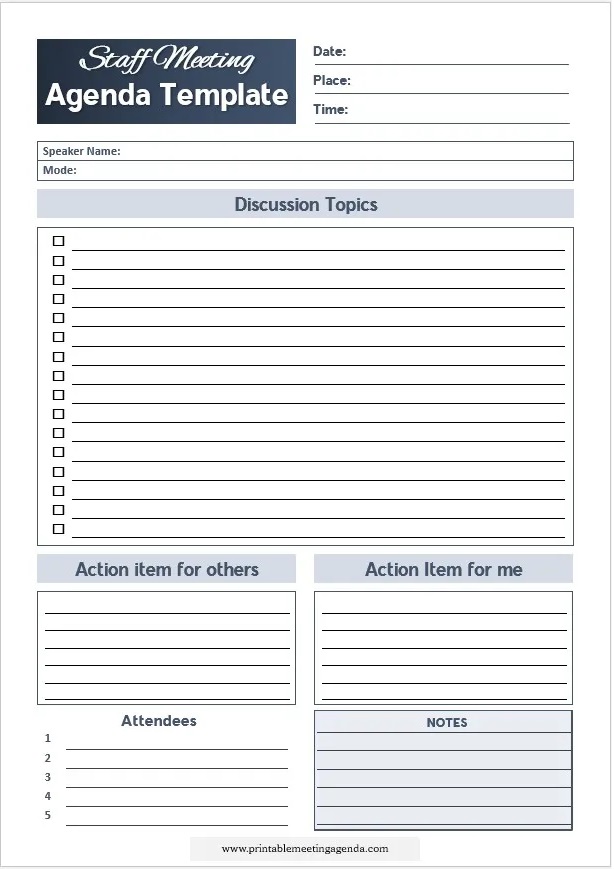
Effective Staff Meeting Agenda Structure
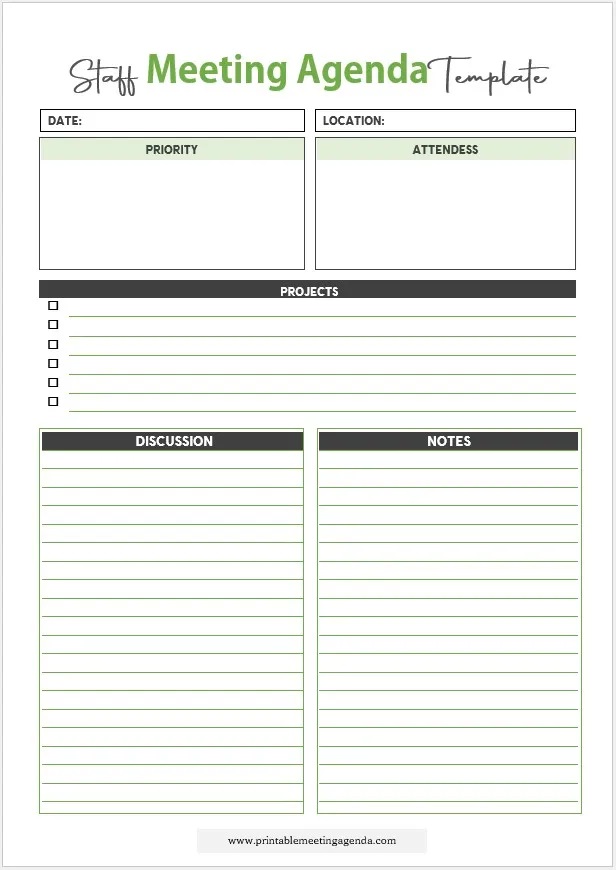
File Type: MS Word {Zip File}
File Size: 28 KB
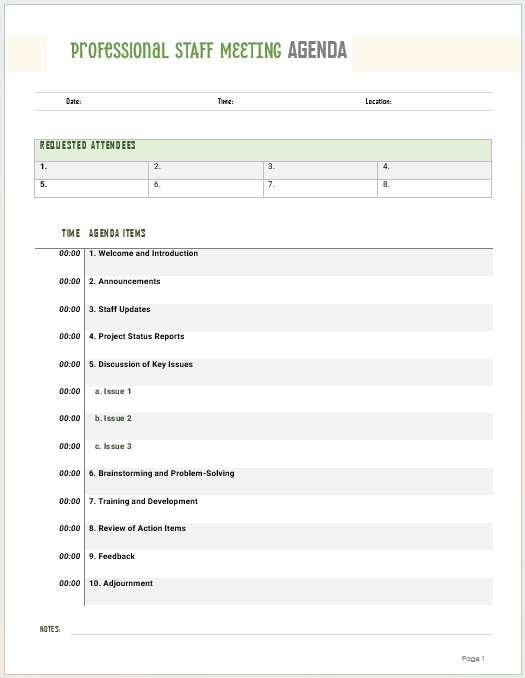
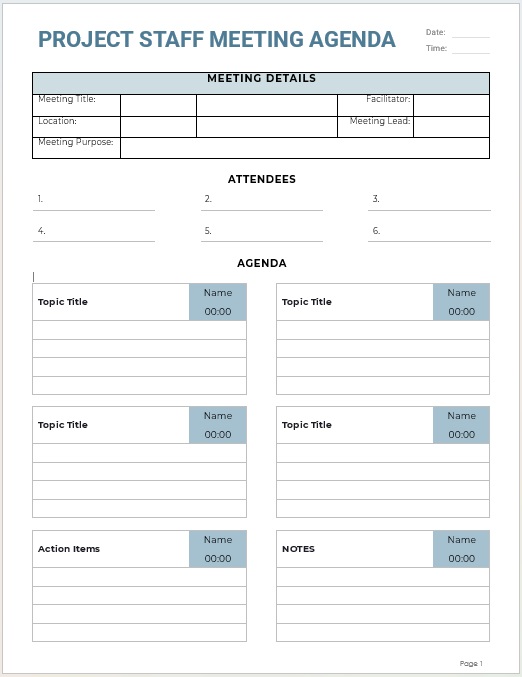
Staff meeting agenda example
Here is a 60-minute monthly staff meeting agenda for a mid-sized office. It opens with company news, gives each department a short update, spends real time on one important change, and leaves room for recognition and questions.
Brightline Logistics
Monthly Staff Meeting Agenda
Objective: Introduce the new leave request process
| Time | Item | Lead |
|---|---|---|
| 9:00 | Welcome and agenda overview | Karen |
| 9:05 | Company news and monthly results | Karen |
| 9:15 | Department updates (5 minutes each) | Dept. leads |
| 9:30 | New leave request process | HR |
| 9:42 | Staff recognition and welcomes | All |
| 9:50 | Open Q&A | Karen |
| 9:57 | Reminders and close | Karen |
Next staff meeting: Friday, 4 December, 9:00 AM
The policy change gets the most time because it affects everyone and will raise questions. Routine information that doesn’t need discussion, such as office reminders, can go in a follow-up email instead.
What to include in a staff meeting agenda
- Meeting details. Date, start and end time, location or video link, and who is chairing.
- Objective. The main thing staff should know or decide by the end of the meeting.
- Company or department news. Results, wins, changes and upcoming events.
- Department or team updates. Short, timed updates from each area.
- Main discussion items. Policy changes, new procedures or problems that affect everyone.
- Recognition. New starters, work anniversaries and staff who went above and beyond.
- Questions and open floor. Time for staff to ask questions or raise concerns.
- Action items and reminders. Deadlines, owners and the date of the next meeting.
Staff meeting vs. team meeting
A staff meeting includes a whole department, office or organization and focuses on shared information: news, policies, results and recognition. A team meeting is smaller, usually 3 to 10 people who work together closely, and focuses on the team’s own work, priorities and problems. Most organizations need both: frequent team meetings and a monthly or quarterly staff meeting.
40 staff meeting topic ideas
Choose two or three main topics per meeting. Trying to cover too many is the most common reason staff meetings run long.
Company and department news
- Monthly or quarterly results
- Progress on annual goals
- New clients, contracts or products
- Changes in leadership or structure
- Upcoming projects and launches
- Budget updates that affect staff
- Customer feedback and reviews
- Plans for the next quarter
Policies and operations
- New or updated policies
- Changes to procedures or workflows
- New software or tools
- Health and safety reminders
- Holiday schedules and office closures
- Scheduling, shifts and coverage
- Security and data protection
- Office facilities and equipment
People and HR
- Welcoming new staff
- Farewells and role changes
- Benefits and open enrollment
- Performance review timelines
- Wellbeing resources and support
- Results of a staff survey
- Hiring plans and referral programs
- Remote and hybrid work guidelines
Recognition and culture
- Employee of the month
- Work anniversaries and milestones
- Thank-yous between departments
- Customer compliments to share
- Upcoming social events
- Charity or volunteering activities
- A “what I learned this month” round
- Team photo or project showcase
Training and improvement
- A short skills session from a colleague
- Lessons learned from a recent project
- Common customer questions and answers
- Ideas to save time or reduce waste
- Upcoming training and courses
- Updates to job checklists or guides
- Feedback on how staff meetings are run
- Staff suggestion box highlights
Staff meeting agendas for different workplaces
Monthly staff meeting
The most common format for offices and small businesses. Allow 45 to 60 minutes.
- Welcome and review of last month’s action items
- Results and news from the past month
- Department updates
- One main topic, such as a policy or process change
- Recognition and new starters
- Questions, upcoming dates and close
All-hands or company-wide meeting
Held monthly or quarterly by leadership for the whole organization.
- Opening from the CEO or director
- Company performance and progress on goals
- Strategy updates and major announcements
- Spotlight on a team or project
- Recognition and milestones
- Open Q&A with leadership
School staff meeting
For principals and teachers, usually held weekly or every two weeks after school. Keep it under an hour.
- Welcome and celebrations from the week
- Administrative announcements and calendar dates
- Student wellbeing and behavior concerns
- Curriculum, assessment or professional development topic
- Upcoming events, trips and parent communications
- Questions and action items
Healthcare staff meeting
For clinics, practices and care teams. Patient safety and changes to procedures usually come first. See also our nursing staff meeting agenda and medical staff meeting agenda templates.
- Patient safety updates and incident reviews
- Changes to clinical procedures or protocols
- Staffing, rotas and coverage
- Compliance and training reminders
- Patient feedback
- Questions and action items
Restaurant and hotel staff meeting
Short, focused meetings held before a shift or weekly. See our hotel and restaurant staff meeting agenda templates.
- Service results and guest feedback
- Menu changes, specials and stock issues
- Food safety and hygiene reminders
- Upcoming bookings and events
- Shift schedules and staffing
- Recognition and questions
How to run an effective staff meeting
- Only meet when you need to. If an update needs no discussion, send it by email and save the meeting for topics that do.
- Send the agenda two to three days ahead. Ask staff to submit questions or topics in advance.
- Keep department updates short and timed. Five minutes each is usually enough.
- Explain the reason behind changes. Staff accept new policies more easily when they understand why.
- Make it two-way. Leave time for questions, and use a quick poll or anonymous question box for larger groups.
- Recognize people by name. Specific thanks mean more than general praise for “everyone’s hard work.”
- Follow up in writing. Send a summary with decisions, action items and dates using a meeting minutes template.
How often should you hold staff meetings?
| Frequency | Typical length | Best for |
|---|---|---|
| Daily huddle | 10–15 minutes | Shift-based teams, clinics, restaurants and retail |
| Weekly | 30–45 minutes | Schools and small offices |
| Monthly | 45–60 minutes | Most offices, departments and small businesses |
| Quarterly all-hands | 60–90 minutes | Larger organizations and company-wide updates |
Frequently asked questions
What is a staff meeting?
A staff meeting is a regular meeting of all employees in a department, office or organization. It is used to share news and results, explain changes, recognize staff and answer questions.
What should be on a staff meeting agenda?
A staff meeting agenda should include the meeting details, an objective, company news, department updates, main discussion items, staff recognition, time for questions, and action items with the date of the next meeting.
How long should a staff meeting be?
Most monthly staff meetings work well at 45 to 60 minutes. Weekly staff meetings should be shorter, around 30 minutes, and daily huddles should take 15 minutes or less.
How can I make staff meetings more engaging?
Keep updates short, let different staff members present, recognize people by name, include a quick skills session or project showcase, and always leave time for real questions. Ask staff what they would change about the meetings.
Should staff meetings be mandatory?
Most organizations expect staff to attend, but meetings should be scheduled during working hours where possible. Share the agenda and a written summary so anyone who couldn’t attend stays informed.
Who runs a staff meeting?
Usually a manager, director, principal or business owner chairs the meeting, with department leads and HR presenting their own items. Rotating some sections among staff helps keep people involved.
Related meeting agenda templates
You may also need a team meeting agenda, weekly meeting agenda, one-on-one meeting agenda or management meeting agenda. Or browse all meeting agenda templates.
Pingback: Weekly Team Meeting Agenda Templates (Free Word) + Example
Pingback: Management & Executive Meeting Agenda Templates (Free Word)