
A family meeting is a short, regular time when everyone in the household sits down together to plan the week, share appreciation, sort out problems and decide on something fun. It gives children a voice, reduces arguments about chores and schedules, and helps busy families stay connected. A simple, friendly agenda keeps it short and makes it something everyone looks forward to.
On this page you’ll find free printable family meeting agenda templates in Microsoft Word, a sample weekly family meeting agenda, a simple five-part structure, 40 family meeting ideas and topics, and tips for meetings with young children, teenagers and adult siblings.
Free family meeting agenda templates
Printable and simple family meeting agendas, plus a family meeting structure sheet. Download them free, print them out or edit them in Word or Google Docs.

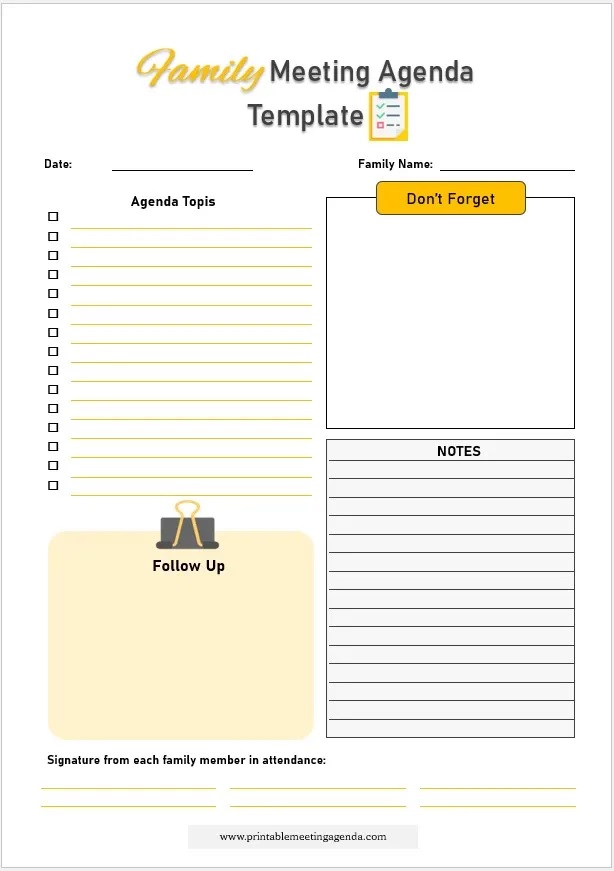

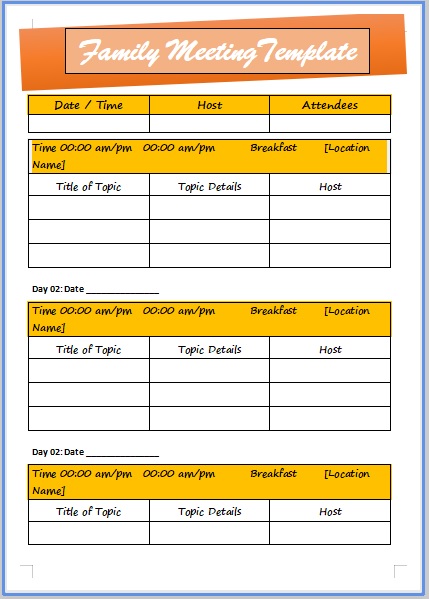
Effective Family Meeting Agenda
/p>
Download Now
Weekly family meeting agenda example
Here is a 30-minute Sunday family meeting for a family with two children. One of the children leads it, everyone gets a turn to speak, and it ends with something fun.
The Rivera Family
Sunday Family Meeting
Big question: What are our screen-time rules on school nights?
| Time | Topic | Who |
|---|---|---|
| 5:00 | Compliments: one nice thing about each person | Everyone |
| 5:05 | Last week’s jobs: how did they go? | Mia |
| 5:10 | This week’s calendar and who needs a ride | Dad |
| 5:15 | Problem to solve: screen time | Everyone |
| 5:25 | Vote on Saturday’s family outing | Everyone |
| 5:28 | Dessert! | Mom |
Decisions written on the fridge whiteboard
Starting with compliments sets a positive tone, and ending with a treat or activity makes children want to come back next week.
A simple family meeting structure
Most family meetings work well with five parts:
- Appreciations. Everyone says something kind or thanks someone for something they did.
- Look back. How did last week’s plans, chores or agreements go?
- Look ahead. The week’s calendar: school events, activities, appointments and meals.
- Solve one problem. Talk through one issue together and agree on what to try.
- Something fun. Plan an outing, pick a movie night film, or end with a game or treat.
How to run a family meeting
- Pick a regular time. The same day and time each week turns it into a habit.
- Keep it short. 15 to 30 minutes, or 10 minutes with very young children.
- Take turns leading. Let children run the meeting and take notes when they’re ready.
- Use a talking object. Whoever holds it speaks, and everyone else listens.
- Keep a shared agenda. A sheet on the fridge where anyone can add topics during the week.
- Focus on solutions, not blame. Talk about the problem, not who caused it.
- Be clear about decisions. Some decisions are made together; parents may still make the final call on others, such as safety.
- Write it down. Post decisions and chores where everyone can see them.
40 family meeting ideas and topics
Appreciation and connection
- One compliment for each person
- Best part of your week
- Something you’re proud of
- Thank someone for helping you
- Share a favorite family memory
- Something you learned this week
- How is everyone feeling?
- Something you’re looking forward to
Planning and schedules
- This week’s calendar
- Meal planning and who cooks
- Rides and pick-ups
- Upcoming birthdays and holidays
- Planning a family trip
- School projects and deadlines
- Visitors and weekend plans
- Back-to-school preparation
Chores and responsibilities
- Weekly chore chart
- Rotating jobs
- Pocket money or allowance
- Keeping shared spaces tidy
- Caring for a pet
- Morning and bedtime routines
- Laundry and bedroom rules
- Saving for something together
Problems and family rules
- Screen time and devices
- Sibling arguments
- Homework time
- Bedtimes
- Being kind with words
- Sharing the bathroom in the morning
- Curfews for teenagers
- Internet safety
Fun and family goals
- Family movie or game night
- Weekend outing vote
- A family challenge for the month
- Trying a new recipe together
- Family fitness goal
- Helping neighbors or volunteering
- Planning a family celebration
- Our family values
Family meetings for different situations
Your first family meeting
- Explain why you’re starting family meetings
- Agree on simple ground rules, such as taking turns and no put-downs
- Choose a regular day and time
- Decide how the leader and note-taker will rotate
- Pick one small, easy problem to solve together
- End with something fun
Family meetings with young children
Keep it to about 10 minutes, use pictures instead of a written agenda, and focus on one topic. Let young children choose the treat or activity at the end, and praise them for listening and sharing.
Family meetings with teenagers
Give teenagers real responsibility, such as running the meeting or planning a trip. Ask for their ideas before making rules that affect them, keep it short, and respect that some topics are better discussed one-to-one.
Family meeting about caring for an aging parent
When adult siblings and relatives need to plan care for a parent, a structured meeting helps keep things fair and focused. Include your parent whenever possible.
- The current situation: health, safety and daily needs
- What your parent wants and values
- Care options and what support is available
- Costs and how they will be shared
- Legal and financial arrangements, and when to get professional advice
- Who will do what, including those who live far away
- Next steps and the date of the next meeting
A neutral person, such as a social worker, care manager or family mediator, can help if the conversation is difficult. Take notes and share them with everyone afterwards.
Family business meeting
Families who own a business together often hold separate, more formal meetings to discuss the business, keeping it apart from family time. Our formal meeting and board meeting agendas can help with the structure.
Frequently asked questions
How long should a family meeting be?
Fifteen to thirty minutes works well for most families. With toddlers or young children, keep it to about ten minutes.
How often should families have meetings?
Once a week is ideal, at the same time each week. Some families add a quick meeting when something big comes up.
What age can children join family meetings?
Children as young as three or four can take part by sharing a compliment or choosing an activity. From around seven or eight, many children can help lead parts of the meeting.
What if someone doesn’t want to take part?
Keep meetings short, positive and fun, give reluctant family members a role such as timekeeper or snack chooser, and avoid using the meeting to criticize anyone.
Who should lead a family meeting?
A parent usually leads the first few meetings. After that, take turns so every family member, including children, gets a chance to lead.
Should children get a vote in family decisions?
For many decisions, such as outings, meals or chore swaps, voting or reaching agreement together works well. Parents may keep the final say on topics like safety, health and money, and should explain why.
Related agenda templates
You may also like our homework agenda, girls’ group meeting agenda, PTA meeting agenda, informal meeting agenda or community meeting agenda. Or browse all meeting agenda templates.